

Access control and video intercoms in Kigali let you decide who gets through your gate or office door, and see them before they do. Kigali Security arranges supply and installation through vetted installers for homes, apartment blocks, offices, schools, clinics and warehouses. We start with a site survey of your entrances and send an itemised quote for panels, readers, locks and wiring.
In many Kigali compounds the gate is the weakest point. A visitor knocks, someone walks out to open it, and the gate stays open longer than it should. A video intercom solves that: you see who is there from the house, talk to them, and open the gate with a button or from your phone.
Options at a glance
| System | Typical use | How it works |
|---|---|---|
| Audio intercom | Small homes, budget installs | Voice only between gate and house |
| Video door phone | Homes and apartments | Camera at the gate, screen indoors, button to open |
| IP video intercom | Homes and offices wanting phone access | Calls go to an indoor screen and a phone app |
| Multi-apartment intercom | Apartment blocks | One panel with a call button or code per unit |
| Keypad or card reader | Offices, staff entrances, stores | PIN or card unlocks an electric lock |
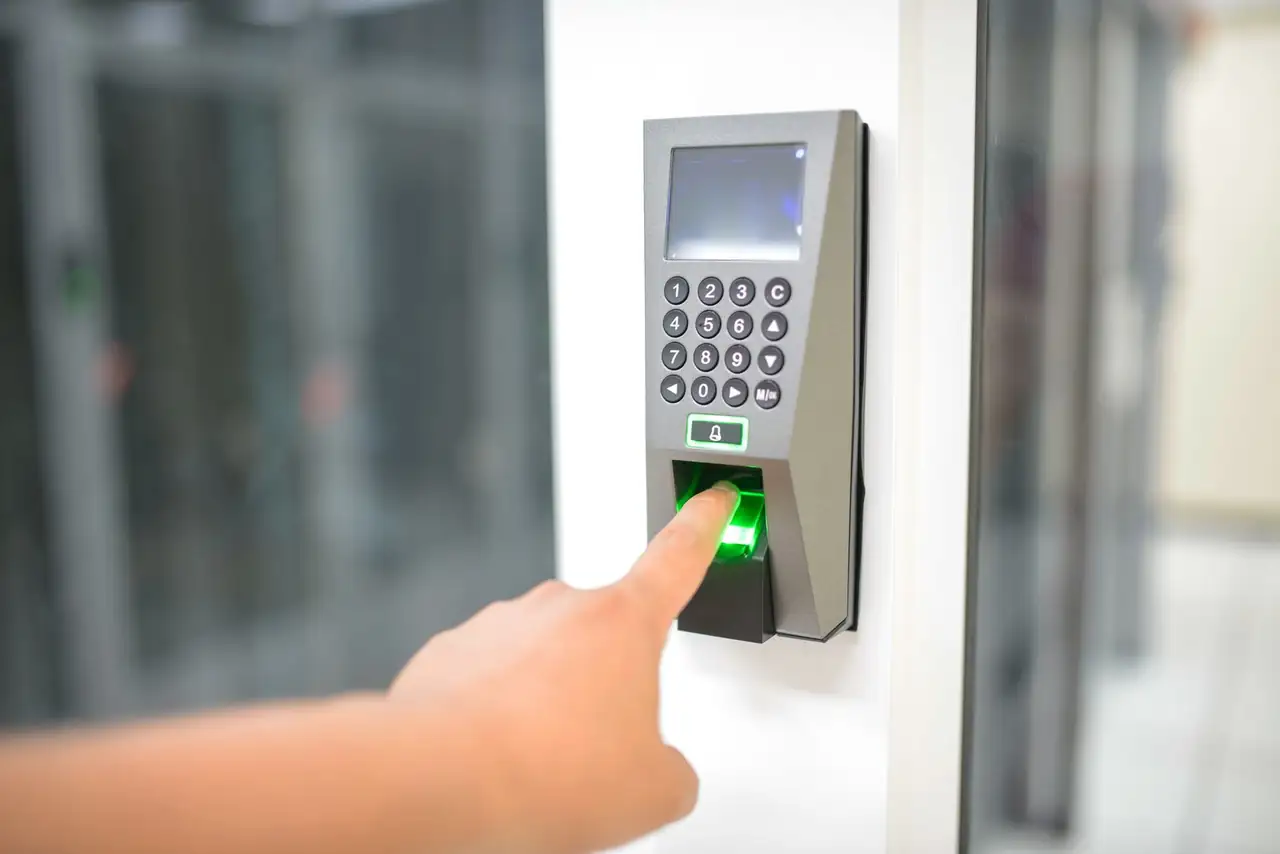
| Fingerprint or face reader | Offices, schools, clinics | Biometric identification plus attendance logs |
| Gate motor integration | Compounds with vehicle gates | Intercom or remote triggers the gate motor |
Video intercoms for homes
A home intercom has an outdoor panel with a camera and call button, an indoor monitor and a lock release or gate motor link. Useful features include:
- Night vision so you can see visitors after dark.
- Phone app answering so you can talk to a delivery rider while you are at work in town.
- Recording of visitor snapshots or short clips.
- Several monitors for larger homes, for example one in the kitchen and one upstairs.
- Link to CCTV: some intercoms show your CCTV cameras on the indoor screen.
Access control for offices and businesses
For workplaces, the question is not only "who is at the door" but "who is allowed in, when". An access control system includes readers at each controlled door, electric locks or magnetic locks, a controller and software where you add and remove users. Benefits include:
- No more lost keys: a lost card is simply deleted.
- Time rules: cleaners can enter only in the evening, staff only on working days.
- Audit logs: a record of who entered which door and when.
- Attendance: some readers double as time and attendance terminals.
Biometrics and data protection
Fingerprint and face readers are popular in Kigali offices because cards can be shared or lost. However, Rwanda's Law No. 058/2021 on the protection of personal data and privacy treats biometric information as sensitive personal data. The law has applied since 15 October 2021 and is supervised by the National Cyber Security Authority (NCSA). Organisations that process personal data must register with NCSA, inform people of the purpose of processing and how long data is kept, and store data in Rwanda unless authorised otherwise. If you plan biometric access, take legal advice on consent and registration, and consider a card or PIN alternative for staff who object.
Locks, gates and fire safety
Choosing the right lock matters as much as choosing the reader:
- Electric strikes replace the keeper on an existing door and are common for wooden doors.
- Magnetic locks hold a door shut with an electromagnet and suit glass and aluminium doors.
- Motorised gate integration uses a relay to open sliding or swing gates.
- Fail-safe or fail-secure: escape routes should open if the power fails; store rooms usually stay locked.
Every controlled exit should have a manual release or emergency exit button. Talk to your building's fire safety adviser before fitting locks on escape routes.
Power, wiring and backup
Access control is only as reliable as its power supply. Readers, locks and controllers need a stable supply with battery backup, and IP intercoms need the router online too. Connecting the system to an inverter or solar backup avoids being locked out, or locked in, during outages. Electrical connections should be made by a person holding an electrical installation permit from the Rwanda Utilities Regulatory Authority (RURA).
Combining with alarms and fences
Access control works well with other layers. A valid card can disarm the alarm system for that zone, and a gate intercom means visitors never need to approach the electric fence. In offices around Kacyiru, Kimihurura and the city centre, a typical setup is card access on the main door, cameras at reception and an alarm for after hours.
Our process
- Survey: we look at each door and gate, its material, how it closes, the power available and cable routes.
- Quote: an itemised list of panels, monitors, readers, locks, controllers, cable and labour.
- Install and program: hardware is fitted, users are enrolled and time rules set.
- Handover: training on adding users, answering calls on the app and using emergency releases.
What affects the price
The cost depends on the number of entrances, the type of intercom or reader, lock type, gate motor integration, software licences, cable distances and backup power. We do not publish fixed prices because equipment costs move with supply and exchange rates. Contact us for a current quote.
Book an access control survey
Fill in the form below with your name, phone or WhatsApp number, property type and location, and choose "Access control / video intercom" under services. Tell us how many doors or gates you want to control. An installer will visit, check each entrance and send a written quote.
Frequently asked questions
What is the difference between an intercom and access control?
An intercom lets you see and talk to a visitor at the gate or door and open it remotely. Access control decides who can enter without help, using a card, PIN, fingerprint or face. Homes usually start with an intercom; offices often need both.
Can I answer the gate intercom on my phone?
Yes, many IP video intercoms send calls to a phone app as well as to the indoor screen, so you can see visitors and open the gate even when you are away. This needs a stable internet connection at the property and power backup for the router.
Is fingerprint or face recognition legal for staff attendance?
Biometric data is classed as sensitive personal data under Rwanda's Law No. 058/2021. Employers using fingerprint or face readers should explain the purpose to staff, limit access to the data and check their registration obligations with the National Cyber Security Authority.
What happens to electric locks in a power cut?
It depends on the lock. Fail-safe locks open when power is lost, which suits fire exits. Fail-secure locks stay locked, which suits stores and gates. A backup battery or inverter keeps the system working normally during outages. The installer helps you choose for each door.
Can an intercom open my motorised gate?
Yes. Most video intercoms have a relay output that can trigger a gate motor or an electric lock on the pedestrian gate. The survey checks the gate type, motor and cable route so the intercom and gate work together reliably.
Do you install systems in apartment blocks?
Yes. Multi-apartment intercoms have one outdoor panel with a button or code for each unit and an indoor monitor in every apartment. Landlords and property managers often add card access for residents and cameras at the entrance.
How much does access control cost in Kigali?
It depends on the number of doors, reader type, lock type, controller, software, cabling and backup power. A single-door home intercom costs far less than a multi-door office system. Contact us for a current quote after the survey.