

An electric fence in Kigali is one of the most effective ways to make a walled compound harder to climb. Kigali Security arranges supply and installation of security electric fences through vetted installers, for houses, apartment blocks, offices, schools and warehouses. Every project starts with a site survey of your perimeter, followed by a written quote listing the energiser, wire, brackets, insulators, gate crossings and alarm options.
Most Kigali homes already sit behind a block or brick wall with a steel gate. An electric fence on top of that wall adds height, a physical shock that discourages climbing and, when connected to an alarm, an early warning before anyone reaches the house.
How a security electric fence works
A security fence has five main parts:
- Energiser: the box that sends short, high-voltage pulses along the wires about once a second. It is mounted indoors or in a weatherproof housing.
- Wires: usually high-tensile steel or aluminium strands, held on insulators so the pulse cannot leak into the wall.
- Brackets or posts: wall-top brackets, straight or angled, or free-standing posts for open boundaries.
- Earth system: earth spikes driven into the ground. A weak earth is a common reason for a weak fence.
- Alarm and monitoring: a siren and often a link to an alarm system so a cut or shorted wire raises an alert.
Warning signs at regular intervals and at the gate are part of a responsible installation. They warn visitors, children and workers, and they add to the deterrent effect.
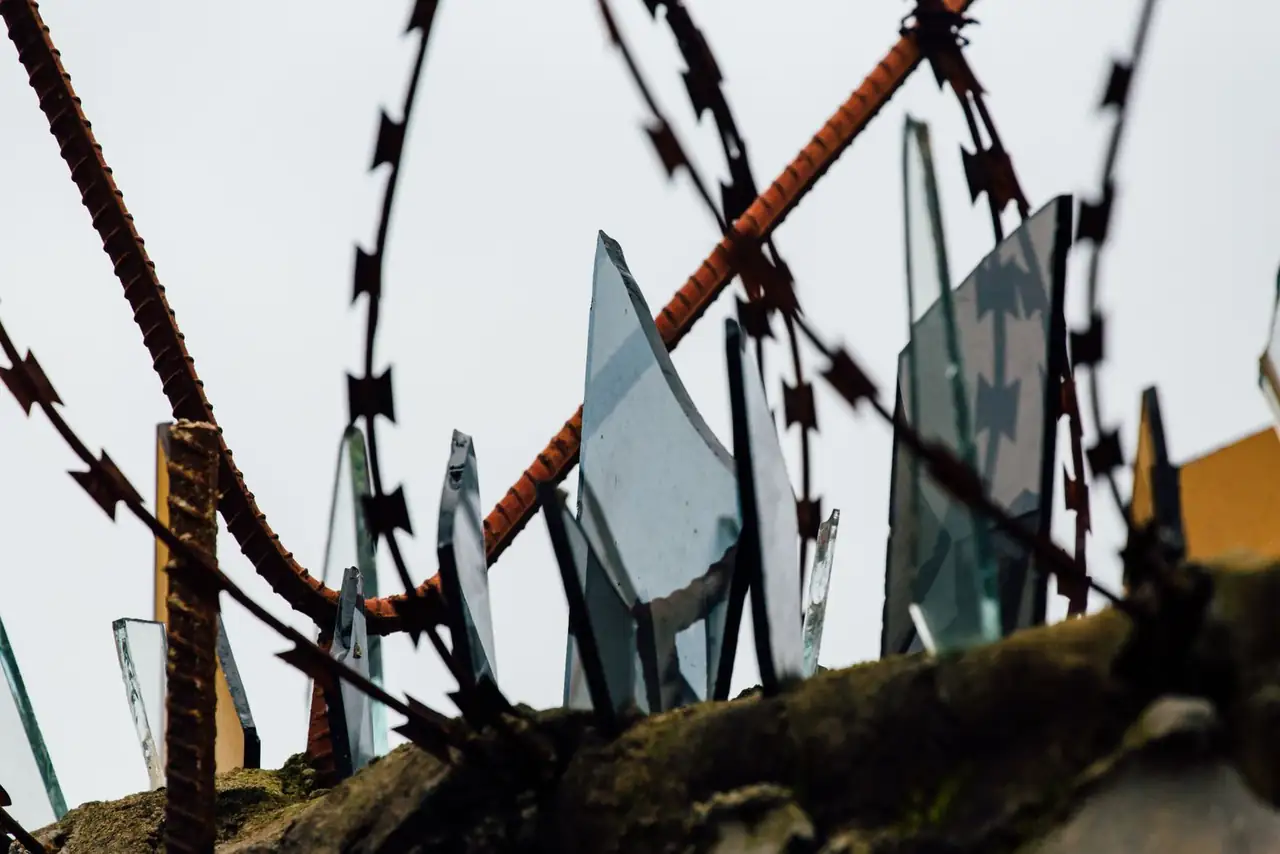
Wall-top or free-standing?
| Option | Where it fits | Things to consider |
|---|---|---|
| Straight wall-top brackets | Most residential compounds with a solid wall | Simple and neat; adds about half a metre to a metre of height |
| Angled (outward or inward) brackets | Walls next to roads or shared boundaries | Angle away from neighbours on shared walls |
| Free-standing fence | Plots, construction sites, large commercial yards | Needs posts, more material and good earthing |
| Fence plus razor wire | High-risk perimeters | Combine carefully so wires do not touch |
What the survey checks
- Perimeter length measured around the whole wall, including returns at the gate.
- Wall condition: cracks, loose blocks and uneven tops need repair before brackets go on.
- Trees, roofs and poles near the wall that would let someone bypass the fence. Branches may need trimming.
- Gates: sliding and swing gates need special crossings or underground cable so the circuit continues.
- Power and earth: a socket for the energiser, a route for the earth cable and a spot for earth spikes.
- Neighbours: shared walls and whether brackets should angle inwards.
Electric fences and other systems
A fence slows an intruder down; it does not record or identify. Pair it with CCTV cameras covering the wall and gate, and you have both deterrence and evidence. A gate video intercom means visitors do not need to touch the fence or call out. And because energisers run all the time, connecting them to solar and battery backup keeps the fence active during long power cuts.
Safety and legal points
Security fences carry real electrical risk if they are badly installed. Keep these points in mind:
- The electrical supply to the energiser should be connected by a person holding an electrical installation permit from the Rwanda Utilities Regulatory Authority (RURA). RURA issues permits in classes, from Class A for simple residential installations up to specialised classes.
- Use an energiser designed for security fencing, not an improvised transformer. Improvised devices are dangerous.
- Keep wires out of easy reach from the ground, especially near pavements, school routes and children's play areas.
- Fit warning signs that can be seen from both sides of the wall.
- Agree with neighbours on shared walls before installation, and keep a written record.
- If your compound is in a managed estate or the wall is on a road reserve, check with the estate or your district One Stop Centre first.
Maintenance
An electric fence needs light but regular care:
- Walk the fence monthly and check for sagging wires, broken insulators and vegetation touching the strands. Fast-growing plants during Kigali's rainy seasons are the most common cause of voltage drops.
- Test the alarm by shorting a wire with an insulated tool, if your installer shows you how.
- Check the energiser battery and replace it when it no longer holds charge.
- After lightning storms, check the energiser and the surge protection.
What affects the price
The cost of an electric fence in Kigali depends on perimeter length, number of strands, bracket type and height, energiser power, number of gates, earth system, alarm integration, wall repairs and backup power. Brand and wire type also make a difference. We do not publish fixed prices because material costs change with supply and exchange rates. Contact us for a current quote after the survey.
Areas we cover
Installers work across Kigali, including compounds in Nyarutarama, Kibagabaga, Kagugu, Gacuriro, Kimironko, Remera, Kicukiro, Niboye, Kanombe, Rebero, Kiyovu and Nyamirambo, as well as commercial and industrial sites in Gikondo and the Kigali Special Economic Zone in Masoro.
Book an electric fence survey
Fill in the form below with your name, phone or WhatsApp number, property type and location, and choose "Electric fence" under services. If you know the rough length of your wall, mention it in the message. An installer will measure the perimeter, check the wall and power supply and send you an itemised quote.
Frequently asked questions
Is an electric fence dangerous?
A properly installed security fence delivers a short, sharp pulse from an energiser rather than continuous current, so it is designed to deter, not to injure. Risk rises with poor installation, wrong energisers or wires within easy reach of children. Clear warning signs and correct height are essential.
Do I need permission to put an electric fence on my wall?
We are not aware of a dedicated Rwandan permit for household wall-top fences, so check with your district One Stop Centre if your property is in a managed estate or the fence sits on a shared boundary wall. The electrical connection should be made by a RURA permit holder.
How many strands of wire do I need?
Wall-top fences in Kigali commonly use between four and eight strands on brackets above the wall. More strands and a taller bracket make climbing harder. The survey looks at wall height, nearby trees and roofs before recommending a configuration.
What happens to the fence during a power cut?
Most energisers have a backup battery that keeps the fence live for a period after mains power fails. Battery capacity and age decide how long. Connecting the energiser to your inverter or solar backup system gives longer protection during extended outages.
Can the fence trigger an alarm?
Yes. Most security energisers detect a cut wire, a short circuit or a drop in voltage and sound a siren. They can also send a signal to an alarm panel, which can alert you by phone. This turns the fence from a passive barrier into a monitored one.
Can an electric fence go on a shared wall with my neighbour?
It is better to agree with your neighbour first, in writing if possible. Brackets can be angled inwards so the wires sit over your side. Warning signs should face both sides. Shared walls are a common source of disputes, so plan this during the survey.
How much does an electric fence cost in Kigali?
The cost depends on the perimeter length, number of strands, bracket type, energiser power, gate crossings, alarm integration and backup. We do not publish fixed prices because material costs change. Contact us for a current quote after the survey.